
Three Hundred Strangers: Thomas Droge on Presence, Value, and What Actually Deserves to Be Called Work
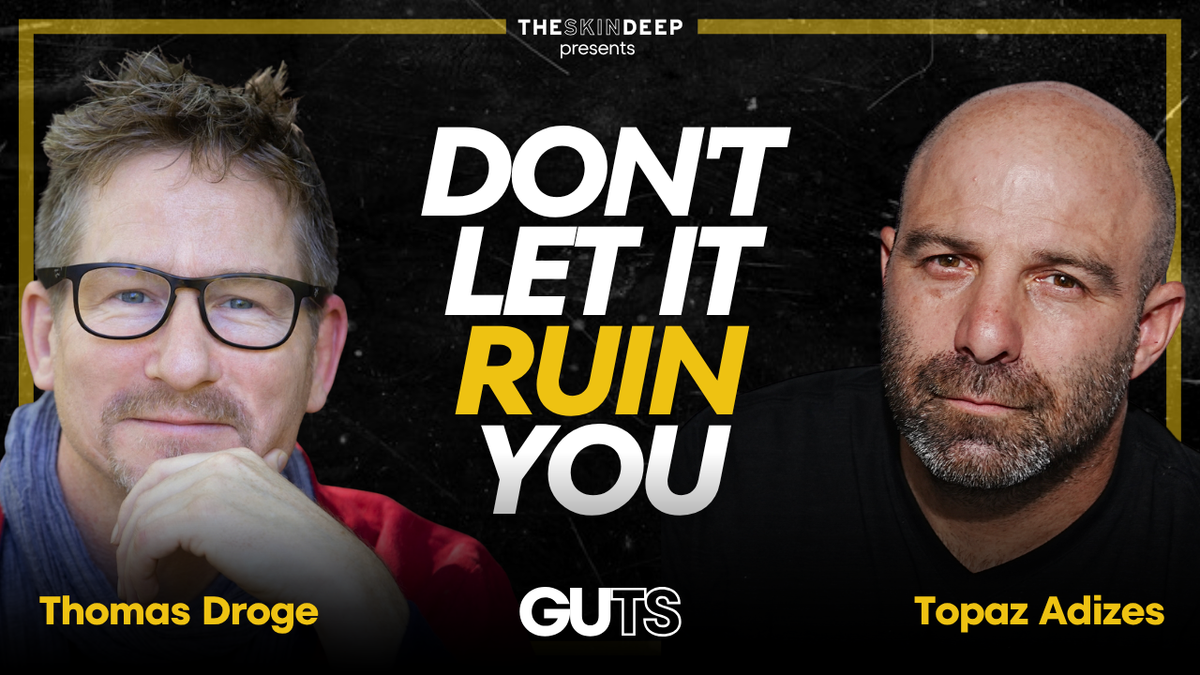
Thomas Droge has a number he returns to often. Three hundred. That is how many strangers filled an old stone church on Beacon Hill the day his father died, each one arriving with a piece of a man Thomas thought he already knew completely: your dad helped me with this, your dad was the guy in our men’s group. He did not recognize a single one of them. What that day actually taught him was not about his father. It was that a life gets measured by what it gives away, not by what it earns, and that most of us have been taught to calculate the wrong number entirely.
As a physician of Classical Chinese Medicine, a Qigong master, the Chief Mindfulness Officer inside a billion dollar AI and fintech incubator, and now the author of his first book, The Leader Within, Thomas spends his working life asking a harder version of that same question. Not who did I touch today, but who decided what counts as valuable in the first place. His answer, the one he keeps circling back to in his own language, is that we have spent a century pricing human presence like a commodity that lost a race to the machine, rewarding speed and replaceability over care, and that the bill on that mistake is coming due faster than most people realize.
That argument did not arrive to him as a theory. It arrived in pieces: on a hospital bed at twelve, on a hillside in Wales at eighteen, on a massage table in Boulder, in a county jail cell in San Francisco, and finally in a closing circle in Scotland where he cried, at sixty two, over a plane ticket he could not afford. Here is how it stacked.
I’m Not Ready Yet
Thomas was twelve when his father had a heart attack on Father’s Day, died for three minutes, and came back saying I’m not ready yet. He got fifteen more years, but the recovery that followed was never one clean turnaround. At sixteen, Thomas’s mother threw his father out of the house, and his father chose to get sober, joined one of the first men’s groups Thomas had ever seen, and started digging into his own shadows. Thomas was the only one of five siblings still living at home, so he was the only one who watched it up close, including the year his father came home an hour late and everyone’s first thought was still he’s drinking.
What that year taught Thomas is easy to skip past. Trust does not return the moment someone changes. It returns in small installments that can be revoked at any second, and staying to watch someone earn it back, minute by minute, was Thomas’s first real education in what presence actually costs.
The Question on the Hill
At eighteen, a friend on the run from a drug crew handed Thomas a kilo of cocaine and a .45 to hide. Thomas hid them under a floorboard, sold a little to his siblings’ friends, and was eventually told to leave town. So he flew to Europe. Hitchhiking through Wales in 1982, a stranger drove him up a hill to talk about spirits, trees, and frequency. Thomas, eighteen and skeptical, let himself imagine it might be true, and his mind dropped straight back to his father’s heart attack six years earlier. That hill is where he first said the question out loud instead of just carrying it silently: what are we, and where do we go.
He would spend the next four decades answering it, but the answer was never going to come from hiding contraband or fleeing a continent. It came from the fact that the wrong turn put him, for one accidental afternoon, in the exact room where the real question could finally get asked.
The Blanket
A year later, heartbroken and living out of a KOA campground in Boulder, Thomas wandered into a martial arts class that changed the shape of his life. His teacher, an ex Navy SEAL turned bodyworker, ran a small group that taught brutal close combat and then, minutes later, stood everyone in hugging circles built to locate where their energy had broken. During one session, Thomas’s body began shaking uncontrollably. His teacher wrapped him in a wool blanket and rocked him until he cried. He came out of it with a different face, less tension in his jaw and shoulders than he had carried his entire life.
This is the piece of Thomas’s education that never shows up on a resume, and it is the one that actually built his career. Presence, he learned that day, is not a concept you adopt. It is information the body has been holding, sometimes for decades, that only leaves once you finally let it.
The Wall
Three months after Thomas moved to San Francisco, his father died for real. He came home from the funeral to learn his girlfriend was in love with his best friend. What came next was plain and dangerous: he ran red lights on his motorcycle every night, hit an off ramp at a hundred miles an hour, got arrested, and spent three days in county jail with no one to call. I was trying to kill myself but not have it be my fault, he says now. I was doing it the chicken shit way. And I was lucky. Incredibly lucky. It took him a decade to put himself back together.
The lesson took just as long to land. A feeling you refuse to have on purpose will eventually stage an accident to make you have it anyway. He does not call the motorcycle a mistake anymore. He calls it a form of asking for help that almost worked.
The Field, Not the Page
Decades later, on a retreat in Scotland, Thomas built a fallen bird’s nest into a shrine of everything he was, the parts he liked and the parts he did not. A woman named Hadassah, who does trauma work between Israelis and Palestinians, told him afterward, I see who you are now. You’re a storyteller. It echoed something writing his own book had already taught him, that he moves through the world in stories. But he has since decided the book itself is not the real thing. It’s the in the moment when I’m with someone, he says, what’s being reflected in the field that needs to come through. That, not the page, is where he says he’s at his kind of highest self, his own words for it.
This is not a side note. It is the actual thesis behind the job title. You cannot bottle presence into a framework and expect it to work the same way twice. It only exists live, between two people, in real time.
The Value Question
In that same circle in Scotland, Thomas broke down over something else. He is sixty two. His wife could not afford the plane ticket to join him on a trip meant to include her, and he told the group he was ashamed that a lifetime of work he believes matters had left him without financial stability. The work you do is really important, Thomas, people tell him, and then the person who sells houses makes seven times what he does. He traces that gap back to a culture that has priced value, since the industrial revolution, by one question: how many times faster can you do what a machine can do. Now AI is coming for the jobs that question used to protect, and Thomas thinks it is forcing everyone toward a better one.
His own answer is smaller and harder than it sounds. Someone cuts you off in traffic, you consider that something might be going on for them instead of laying on the horn. Someone is upset at work, you ask if they are okay instead of getting defensive. He built a small community called the Sacred Commons around the same idea, people with resources and people with his kind of skills trying to build something together instead of, as he puts it, more rich people trying to feel better about themselves. And when asked what matters most, he did not just write self awareness, empathy, and compassion. He wrote them in bold capital letters, followed by one more word: in action. The test, he says, is not whether you believe those words. It is whether, in a moment of conflict, you are trying to understand the other person more than you are trying to win.
The GUTS Lesson
Thomas Droge’s life reads like a single argument, made over and over in different rooms, against a culture that only knows how to price what a machine can measure. He made it as a kid watching his father earn back trust one late night at a time. He made it hiding contraband under a floorboard and asking a stranger’s question out loud on a hillside. He made it shaking under a wool blanket and later, racing a motorcycle toward a wall he half wanted to hit.
What makes his story worth hearing here, of all places, is that he never got to stop making the argument. At sixty two, with a book out and a title that sounds like he has it figured out, he still cried in a circle about a plane ticket. The work was never about arriving at presence once and keeping it. It was about proving, over and over, that the thing worth measuring was never speed.
What are you calling productive that is actually just fast, and what would it cost you to notice the difference?
Listen to or watch the full episode on YouTube, Apple Podcasts, or Spotify.
Topaz Adizes is the Founder of The Skin Deep, an experience design studio focused on the transformative power of human connection. He is also the host of the podcast GUTS (Getting Under the Skin) and author of 12 Questions for Love.
Comments ()