
18,000 Falls Per Jump: Debriana Berlin on Embodiment, Power, and What Happens When the People Running the World Forget They Have Bodies
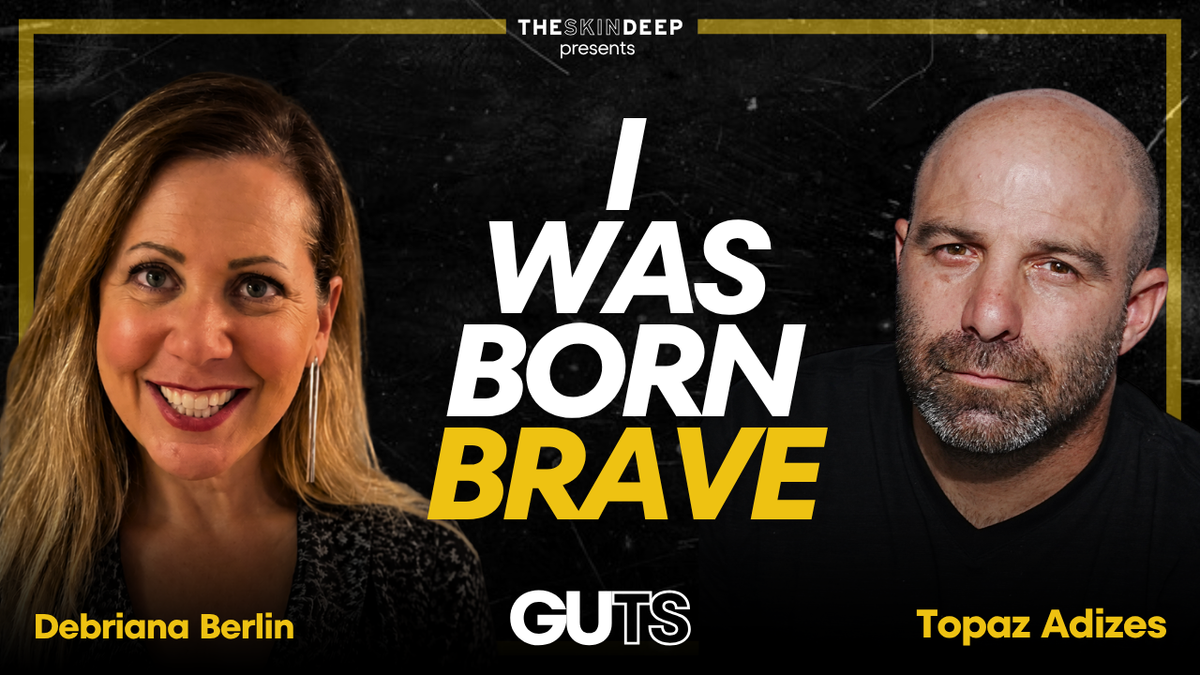
Debriana Berlin has a number she returns to often. On average, it takes eighteen thousand falls to learn one jump in competitive figure skating. She learned fourteen jumps. By her own count, she has fallen roughly 250,000 times, and gotten up 250,000 times, all while carrying an unstable home life, changing clothes in the car to make it to homeroom, and becoming one of the more quietly influential people in American climate communications. The getting up, she says, was always the real lesson.
Deb has spent her adult life working at the intersection of the body and power: teaching yoga to US Senate staffers during active legislative sessions, running strategic communications for the EPA under the Obama administration through the Deepwater Horizon disaster, and now building The Future Reference, a climate strategy firm that advises federal agencies, presidential campaigns, and mission driven organizations. The argument she keeps returning to, in her Substack and in nearly every conversation, is simple and unsettling: the people making decisions for the rest of us are not in their bodies. She thinks that’s the most dangerous thing happening right now.
The Rink as Refuge
Deb grew up in the New York area, in what she calls a crazy, unpredictable home. At four or five, her mother gave her a choice between ballet, gymnastics, and ice skating. She picked the rink. By seven she was competing. By high school she was up at five in the morning, changing in the car, skating before and after school, the kind of physical discipline most people never build.
She didn’t fully understand until much later what the rink gave her beyond the sport itself. It was safe. You literally cannot be followed onto the ice without skates. The bubble was real. Inside it was Deb and a dozen other Olympic hopefuls, doing what amounted to ballet on blades thin as knives, darting around each other at full speed, launching triple toe loops. In that bubble, she wasn’t a kid navigating an unpredictable home. She was an athlete testing the outer edge of what her body could do, launching herself into the air with nothing underneath her, building a tolerance for risk that would shape everything that came after.
Her father was an entrepreneur and salesman who, after divorcing her mother, remade himself into a socialite and a playboy. She watched him charm, disarm, and close business and dates with real precision, and absorbed the lesson completely: power, done well, isn’t domination. It’s connection, deployed at exactly the right moment. Combined with what the ice taught her, that lesson would shape her whole career.
The Senate’s Yoga Teacher
After college Deb moved back to New York, then to Washington, where she spent seven years at the EPA, eventually running strategic communications and heading their White House think tank creating new environmental programs. She earned a Public Service Bronze Medal for finding ways to spend the agency’s nine billion dollar budget more effectively. She worked Deepwater Horizon, Fortune 50 climate plans, new ideas for the presidential administration. By every outward measure, she was at the center of everything.
She was also sneaking down to the gym at every free moment, rolling out a yoga mat in the corner, asking herself: what does my body need to actually function right now? A question she’d asked herself every morning on her yoga mat for thirty years. The EPA’s gym director noticed and asked her to teach a yoga class. She did. Then she started teaching Senate staffers.
What she saw in those rooms fascinated and unsettled her in equal measure. These were people running the country, negotiating treaties, drafting legislation, managing crises with national consequences, and they were fragmented. Their bodies weren’t part of the conversation. They sat in chairs, under fluorescent lights, in windowless offices, deciding things for millions of people while cut off from the very instrument they were using to think.
Her thesis, at its core, is almost mechanical: if you’re not in your body, you’re not getting the full signal. You’re deciding from a narrower bandwidth. You’re treating yourself, she says with real heat, the way you’d never treat your dog. You’d never leave your dog alone in a windowless room under fluorescent light for ten hours. It’s functionally cruel. We call it an office and do it to ourselves daily, then wonder why the decisions that come out of those rooms feel inhuman.
The Windowless Office
Eventually she got promoted, and the promotion came with a private office to manage her team. No window. She’d been sitting near one before and asked if she could stay there when she didn’t need the privacy. The answer was no.
By then she had Hashimoto’s, one of the autoimmune thyroid disorders that affect roughly one in eight middle aged women. She’d been working out daily, eating well, sleeping on schedule, and she still burned out completely. The body keeps score even when you think you’re managing it. The windowless box was the last straw. She needed air, light, trees. She left EPA.
But she didn’t leave the work. She’s done the same thing ever since, just outside the system, for climate tech startups, federal agencies, candidates, nonprofits. Her father’s lessons about charm and timing still animate everything she does. So does the skating. She still goes to the rink, and this past February she crossed the frozen Swedish archipelago, eight straight hours on the ice, moving across the ocean in her first language with nothing at stake.
The Argument She Is Making
What Deb is building toward, with The Future Reference and her Substack, is a unified theory of how disembodiment produces bad outcomes at scale. If the people setting environmental policy aren’t connected to their own bodies, they won’t feel what it actually means to need clean air and water. If lawmakers are deciding from a state of chronic burnout, the decisions will carry that fragmentation with them. A disembodied leader makes disembodied policy. And a disembodied policy makes a disembodied country.
The repair, in her view, is physical, not political: getting people, especially powerful ones, back into the instrument they were born with and have been ignoring since they were first put in a chair at five years old and told to stop moving.
She didn’t arrive at this through a spiritual framework. She got here through a lifetime of embodied practice: the rink, the yoga mat, the Senate floor, the EPA during one of the worst environmental disasters in American history. She knows exactly what it feels like when body and mind integrate. She calls it being sharp. She calls it flow. She calls it the difference between people who are actually present for a decision and people just going through its motions.
The GUTS Lesson
Debriana Berlin has fallen roughly 250,000 times and gotten up every single time. What the ice taught her is that getting up isn’t willpower, it’s practice, determination repeated until it becomes who you are.
What her work is really asking of all of us is something simpler and more radical than any policy proposal: get back in your body. Not because it’s spiritual, or healing, or trendy. It’s because your body is where the best decisions come from. And the world is too fragile right now to keep being run by people who have forgotten they have one.
Listen to or watch the full episode on YouTube, Apple Podcasts, or Spotify.
Topaz Adizes
Founder of The Skin Deep & host of GUTS

Comments ()