
The Science of Human Connection: Season 1 Wrap-Up
What Did We Learn from Putting Human Connection Under the Microscope?
What Did We Learn from Putting Human Connection Under the Microscope?
For over a decade, The Skin Deep has been in the business of witnessing connection. Through {THE AND}, we have documented thousands of couples, friends, and strangers as they opened up to each other on camera, and we have watched, in real time, the exact moment a wall comes down or a heart opens up.
But watching something and understanding it are two very different things.
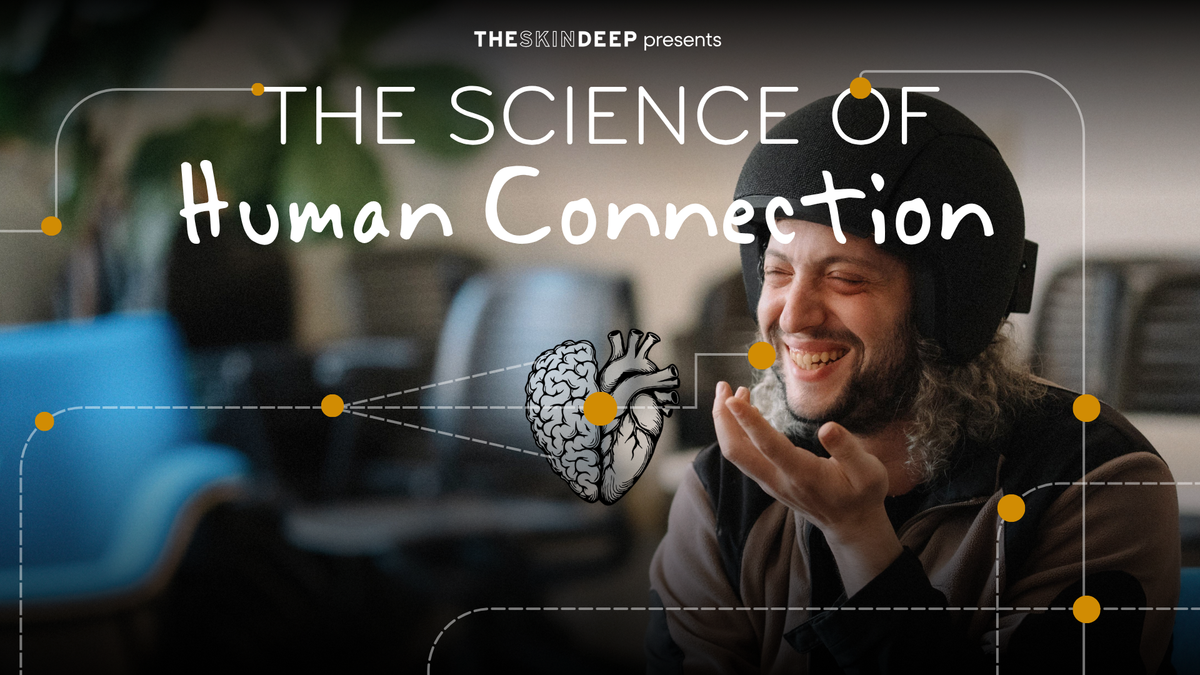
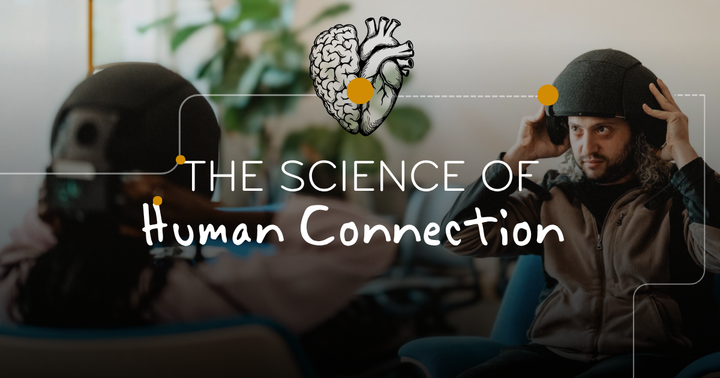
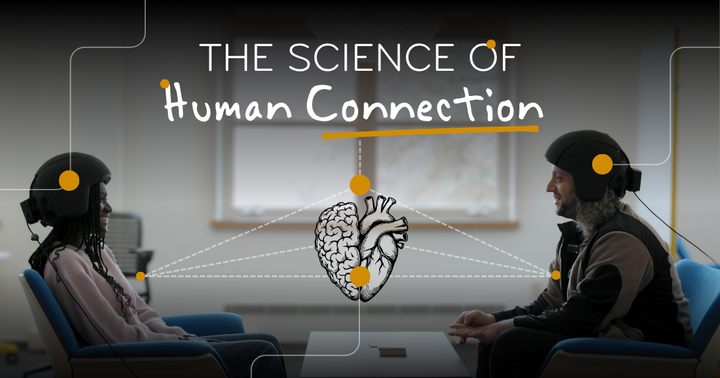
That question — what is actually happening when two people truly connect? — is what led us to launch The Science of Human Connection, our first documentary series in partnership with the Consortium for Interacting Minds at Dartmouth College. Alongside researchers Thalia Wheatley, Luke Chang, and Emma Templeton, we set out to move from the "what" to the "how." From capturing beautiful moments to beginning to understand the neuroscience, physiology, and biology behind them.
The first season is now complete and has raised a lot of questions and some genuinely surprising answers.
Here's what we explored.
Episode 1: What happens in your brain when you feel connected?
The Science of Human Connection Episode 1
We started with the brain itself. What is actually taking place neurologically when two people feel genuinely seen by each other? This opening episode introduced the partnership and posed the framing question that would carry us through the whole series: can something as intimate and intangible as human connection be measured, studied, and understood, without losing what makes it so powerful? We think it can. And what we've found so far only makes it feel more miraculous, not less.
Episode 2: Can science actually measure a feeling?
The Science of Human Connection Episode 2
In episode two, we went inside the lab. The Dartmouth team has been using {THE AND} as a scientific stimulus — placing participants in an fMRI scanner and tracking their brain activity as they watch our conversations unfold on screen. In this episode, they worked with the Laura & Brad episode, in which a couple who lost their son open up to each other with devastating honesty.
What does grief look like in the brain? What can facial expressions, physiological data, and self-reported emotion tell us when they're all measured at the same time? The process is painstaking, and the researchers are refreshingly humble about it. Science, like connection itself, isn't about arriving at a final answer. It's about being willing to keep asking.
Episode 3: What does silence actually say?
The Science of Human Connection Episode 3
This is perhaps our favourite insight from the whole season. Episode three explored one of the most overlooked elements of human conversation: the pause.
The Dartmouth team have been studying silence not as empty space but as data — tracking what happens to people's sense of connection during the quiet moments in a conversation. What they found was striking. With strangers, silence tanks connection almost instantly. With friends, those same pauses deepen it.
Silence, it turns out, is not the absence of communication. It's one of its most honest forms. Some of the most powerful moments in the {THE AND} conversations, the ones we've seen audiences respond to most deeply, are the ones where nothing is being said. Now we're beginning to understand why, and what's happening in the brain during those moments. It's a beautiful reminder that connection doesn't always require words.
Episode 4: What are we losing?
The Science of Human Connection Episode 4
The final episode of the season pulled back to look at the bigger picture. After three episodes exploring the mechanics of connection — the brain, the lab, the silence — we asked the harder question: what happens when we stop connecting in person?
Thalia, Luke, and Emma reflected on rising loneliness, the role of AI and social media, and why the world those platforms show us looks almost nothing like the real texture of human connection. It's a question that sits at the heart of everything we do at The Skin Deep, and one that feels more urgent with every passing year.
Episode four is both a closing and an opening. It marks the end of this first season and signals that the most important discoveries are still ahead.
What this collaboration has meant to us
Working alongside the Consortium for Interacting Minds has changed how we look at our own archive. Thirteen years of conversations. Over 1,200 filmed interactions with people from around the world. We always knew there was something powerful in what we were documenting. What this partnership has begun to show us is just how biological, complex, and essential that power actually is.
"For years, we looked at a frame and saw a beautiful moment. Now, we're beginning to sense the neurological dance behind it. It hasn't made connection feel any less magical — it's made it feel more miraculous."
~Topaz Adizes, Founder of The Skin Deep and creator of {THE AND}
What comes next, and where you come in
We are continuing this journey, and we want you to help shape it.
We would love to know: what questions came up for you as you watched this season? What surprised you? What part of the human experience do you most want us to put under the microscope next? The chemistry of heartbreak? The biology of trust? The mechanics of loneliness? The science of why some conversations change us and others don't?
Drop your thoughts in the comments, or email us directly. We genuinely would love to hear your thoughts. want you to help us hold the compass.
Follow the journey at theskindeep.com/science
Comments ()