
Made Human — Undivided Attention
William James said, “My experience is what I agree to attend to.” If that’s true, then what are we agreeing to when our attention is pulled in fifty directions at once?
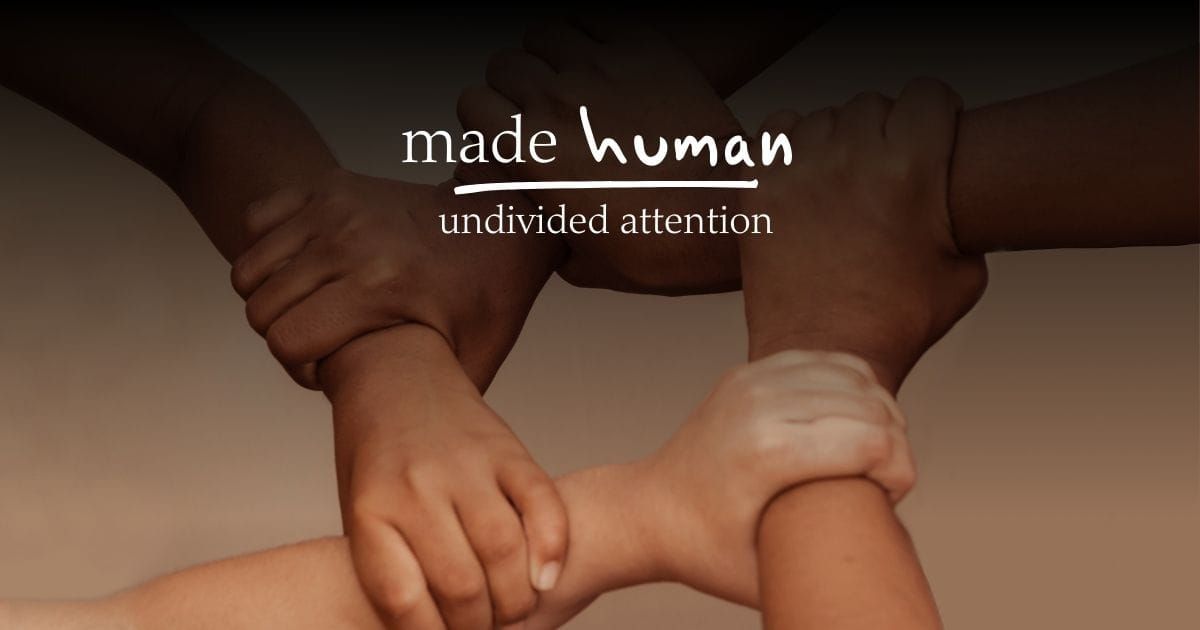
Love isn’t an accident you trip over. It’s an awareness you arrive at.
And I’ve come to believe you only sense it in one condition when you are completely present.
Undivided attention.
Simone Weil once wrote, “Attention is the rarest and purest form of generosity.” She didn’t mean scrolling while you nod at your partner. She meant the full weight of your presence given to another without distraction. That kind of attention is love in action.
Erich Fromm, in The Art of Loving, said love is not a passive feeling but an active practice. To love is to care, to take responsibility, to attend. Not half-attend. Not multitask your way through intimacy. Attend fully.
And yet we live in a world designed to divide that very capacity. The attention economy is the most lucrative marketplace in human history. Companies don’t sell products, they sell and buy your focus. They slice it, auction it, monetize it. William James said, “My experience is what I agree to attend to.” If that’s true, then what are we agreeing to when our attention is pulled in fifty directions at once?
No wonder happiness feels slippery.How can we taste love when we’ve trained ourselves never to stay long enough in one place to feel it?
Sherry Turkle, in her research, points out that even a silent phone resting on a table erodes the depth of a conversation. Presence fractures simply by knowing something else could call us away. And David Whyte speaks of “the fierce presence of attention” as the ground where intimacy and belonging grow. Lose that, and love becomes performative, a word without its heartbeat.
This is the paradox: the world is structured to scatter us. But love, connection, coherence, things I believe we long for, require the opposite. They demand undivided attention.
So the question isn’t "How do we hold onto love in a distracted world?"
but rather "How do we reclaim our attention—so we can feel love again in its humblest form?"

Comments ()