
One Nigh With RITUAL
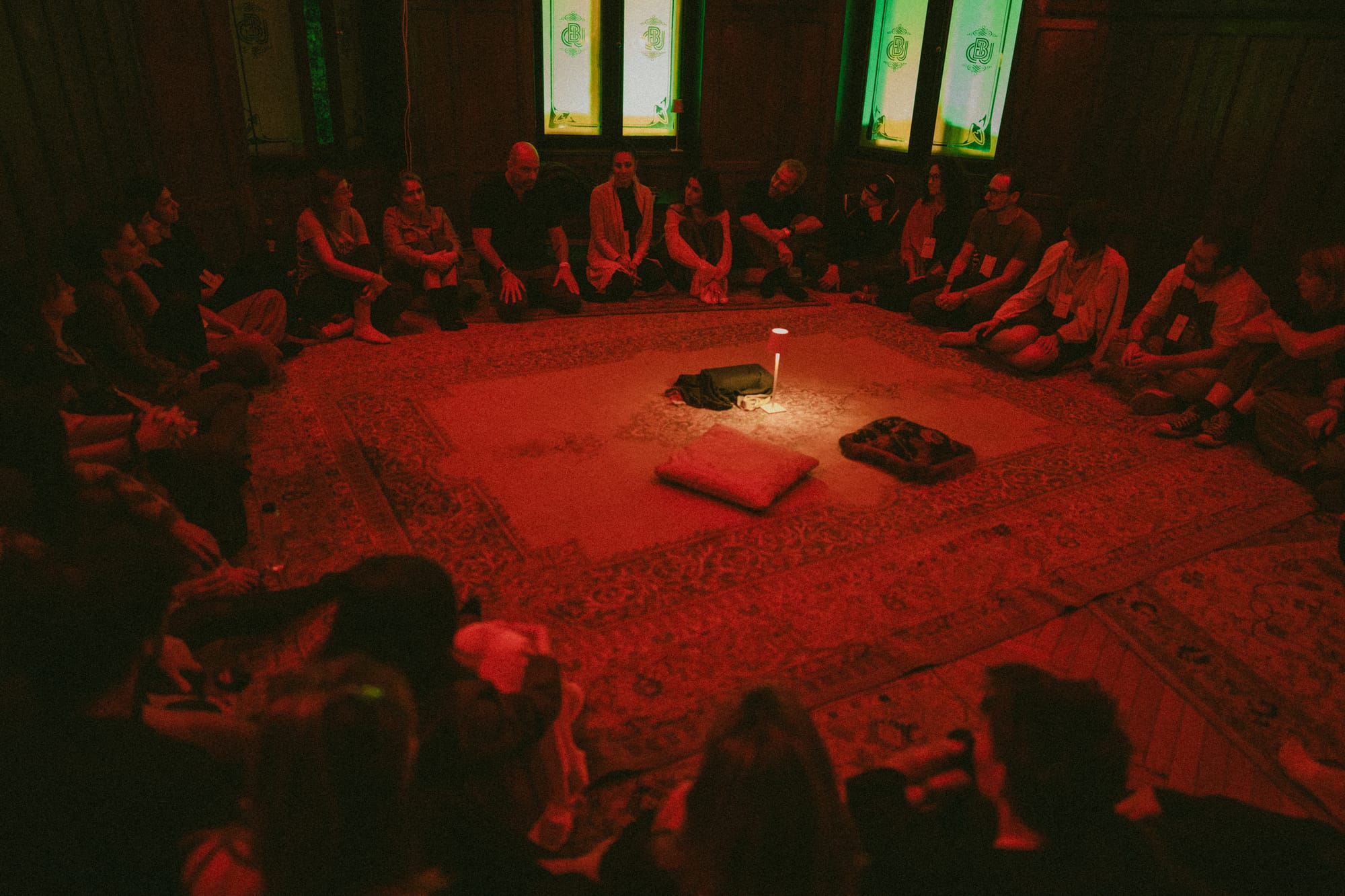
Eleven o’clock on a Saturday night at the UNFINISHED Festival in Bucharest. The talks were over. People had been drinking wine in the garden for a few hours, there was music somewhere, and the whole festival had that loose late quality where nobody is performing anymore.
I opened a small room. Cushions on the floor, a couple of candles, one low table. I said it would be fifteen or twenty people. Thirty came.
Most of them had never met. Brazil, Germany, Austria, Romania, the United States. Some had spent the weekend in the same sessions without ever speaking. A few were friends. And for the next couple of hours we played RITUAL.
I have made a lot of things in the last thirteen years. This is one of my favorite experiences to host, and it took me a while to understand why.
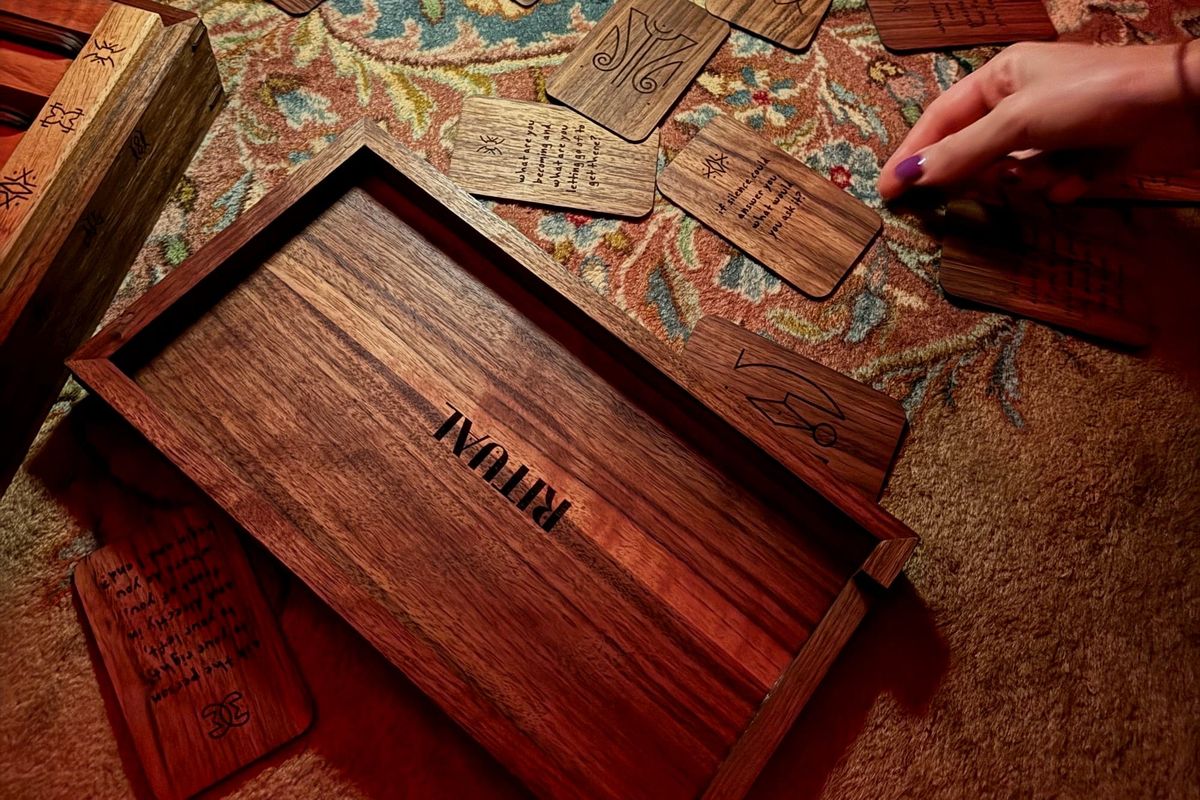
RITUAL is a wooden box.
Inside it are engraved slats, each one carrying its own design, and you choose yours by the design, not by what it says. You reach in, something catches you, you take it out. Then you read what's on it.
That's the whole mechanic. An object and an invitation.
What it is not is a set of conversation cards. And this is where it separates from the rest of our work.
{THE AND} illuminates the connection between two people. You create the space between two people, a couple, a mother and son, two strangers, and you ask well constructed questions. What you experience is the thing that lives in the space between. The relationship is the subject.
RITUAL does something else. It illuminates one person's experience of living. But it does it communally.
Nobody is reflecting on their relationship with anybody. They are reflecting on what it has been like to be alive, out loud, in front of other humans who are doing the same thing.
That combination is unusual, and it's why the room feels the way it does.
RITUAL: A New Experience from The Skin Deep
Here is the part I find genuinely magical, and it happens dozens of times a night.
Someone pulls a piece. They read it out. A prompt, a question, an invitation to do something.
And then there is a pause.
In that pause, something enormous happens, and it happens in everyone at once. The room runs the possibilities. How is this person going to answer? What are they going to do? Are they going to go there or are they going to deflect? And underneath that, quietly, every single person is also answering it themselves. What would I say if that were mine?
For a few seconds, the prompt is pregnant with every possible response. Thirty people, thirty histories, thirty different lives that could be revealed. You can feel the range of it in the room. You get this sudden sense of how many ways there are to have been a person.
That pause is the most alive moment in the game, and nothing has happened yet.
Then it lands.
The person speaks, or they act, and all of that infinite possibility collapses into one thing. One choice. One sentence. One disclosure that nobody in the room saw coming, including them.
And it is almost always not what you predicted.
That's the whole thing, right there. Everything could have happened. One thing did. And the one thing that did reveals something true about that specific human being and the particular life they are living.
Then the room holds it. Nobody fixes it, nobody responds with advice. Somebody else reaches into the box.
What I keep coming back to is that this is a pretty accurate description of being alive.
At every moment there are many versions of what could happen next. Many things you could say, many people you could be in the room. And then you choose. One of them actually occurs, and the rest stay possible forever and never happen.
Watching thirty strangers do that in front of each other, at eleven at night, in a city most of them did not live in, with a wooden box on a low table between them, left me with the thing I always want from this work and can never manufacture.
A deeper appreciation for the experience of living.
Not mine specifically. Everyone's.
That is what the object is for. It isn't a game you win. It's a reason for a group of people to be in a room together and find out what's actually in there.
Topaz Adizes is the Founder of The Skin Deep, an experience design studio focused on the transformative power of human connection. He is also the host of the podcast GUTS (Getting Under the Skin) and author of 12 Questions for Love.


Comments ()