
The Art of Conversation: Why We Need Analog Experiences
The art of conversation has not been lost. It has only been waiting for someone to set the table. Some food. A few prompts that give people permission to be honest, curious, and a little vulnerable with each other.
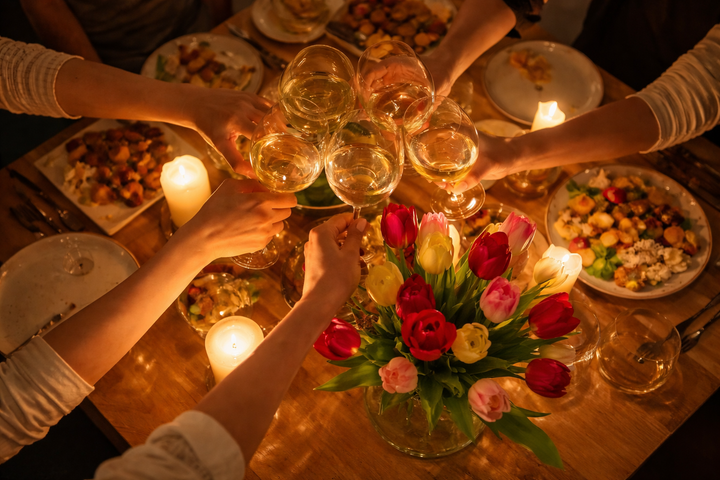
In an era of infinite scroll, instant replies, and algorithmically curated feeds, something quietly slipped away from our daily lives, the unhurried, unscripted pleasure of simply talking to one another. Not texting. Not threading. Talking. Face to face, at a table, over food and candlelight, without a notification in sight.
We are, by nature, social creatures. Thousands of years of human evolution have wired us for exactly this: proximity, eye contact, laughter shared in the same room. And yet here we are, an entire civilization of people who know how to type faster than we speak, who can maintain twelve simultaneous chats but struggle to hold one deep conversation over dinner.
This is not a screed against technology. It is an invitation, a gentle, spirited argument for reclaiming the art of the in-person conversation, and for building the kinds of rituals and evenings that make it possible.
The Conversation We've Forgotten How to Have
Think back to the last time you sat around a table with people you genuinely cared about, friends, family, neighbors, strangers who became friends, and lost track of time. Dinner bled into dessert. Dessert became a second bottle of wine. Someone said something that made everyone go quiet in the best possible way, and then the whole table erupted. You drove home feeling impossibly full, and not just from the food.
That kind of evening doesn't happen by accident. It happens when people are present, when there's an atmosphere that invites openness, and when someone, often without realizing it, asks exactly the right question at exactly the right moment.
The problem is that most of us have forgotten how to be that someone. Our social muscles have atrophied from disuse. We default to the safe shallows: the weekend recap, the complaint about traffic, the benign consensus on whatever's happening in the news. Meaningful conversation, the kind that reveals something true, changes a mind, deepens a bond, requires a kind of courage and curiosity that needs to be exercised regularly to stay strong.
"Conversation is a meeting of minds with different memories and habits. When minds meet, they don't just exchange facts: they transform them." - Theodore Zeldin
The Dinner Party as Lost Art Form
There was a time, and perhaps you remember it, or perhaps your parents do, when the dinner party was a cultural institution. You dressed up a little. You brought a bottle. You sat around a table for three hours and talked about ideas, about books, about life. You argued, pleasantly. You learned something. You felt, at the end of the night, more alive than when you arrived.
The dinner party has fallen out of fashion, replaced by the easier convenience of restaurants, streaming services, and the particular paralysis that comes from having too many entertainment options and not enough intentional social structures to anchor us. We've lost the container that held those conversations.
But the hunger for them hasn't gone anywhere. If anything, it's grown more acute. Studies consistently show that loneliness is rising across all age groups, that people report having fewer close friends than they did decades ago, and that the quality, not just quantity, of our social interactions has a profound effect on mental health, physical wellbeing, and even longevity. We don't just want connection. We need it.
The dinner party, reimagined for modern life, is one of the most accessible and powerful ways to reclaim it. You don't need a large home or a culinary degree. You need a table, some food, and the willingness to create an evening with purpose.
Game Night, Grown Up
There is a related tradition that has been quietly having its renaissance: the adult game night. Not the childhood board games dragged from a closet, though those have their charm. Something more intentional, evenings designed around experiences that facilitate real interaction, that invite laughter and storytelling and the revelation of unexpected things about people you thought you knew.
The best grown-up game nights share a quality with the best dinner parties: they create a structured permission to go deeper. The game itself becomes a kind of social scaffolding, giving people something to orient around while quietly lowering the barriers to genuine exchange. No one has to perform spontaneous depth. The experience draws it out naturally.
This is why games built around conversation and storytelling, rather than competition and strategy alone, have become such a touchstone for adults who are hungry for something more substantive from their social lives. When the right prompt lands at the right moment, a room full of people can go from pleasant strangers to something approaching intimacy in the space of an evening. That kind of alchemy is worth designing for.
Spotlight - Ritual: A Game Worth Gathering For
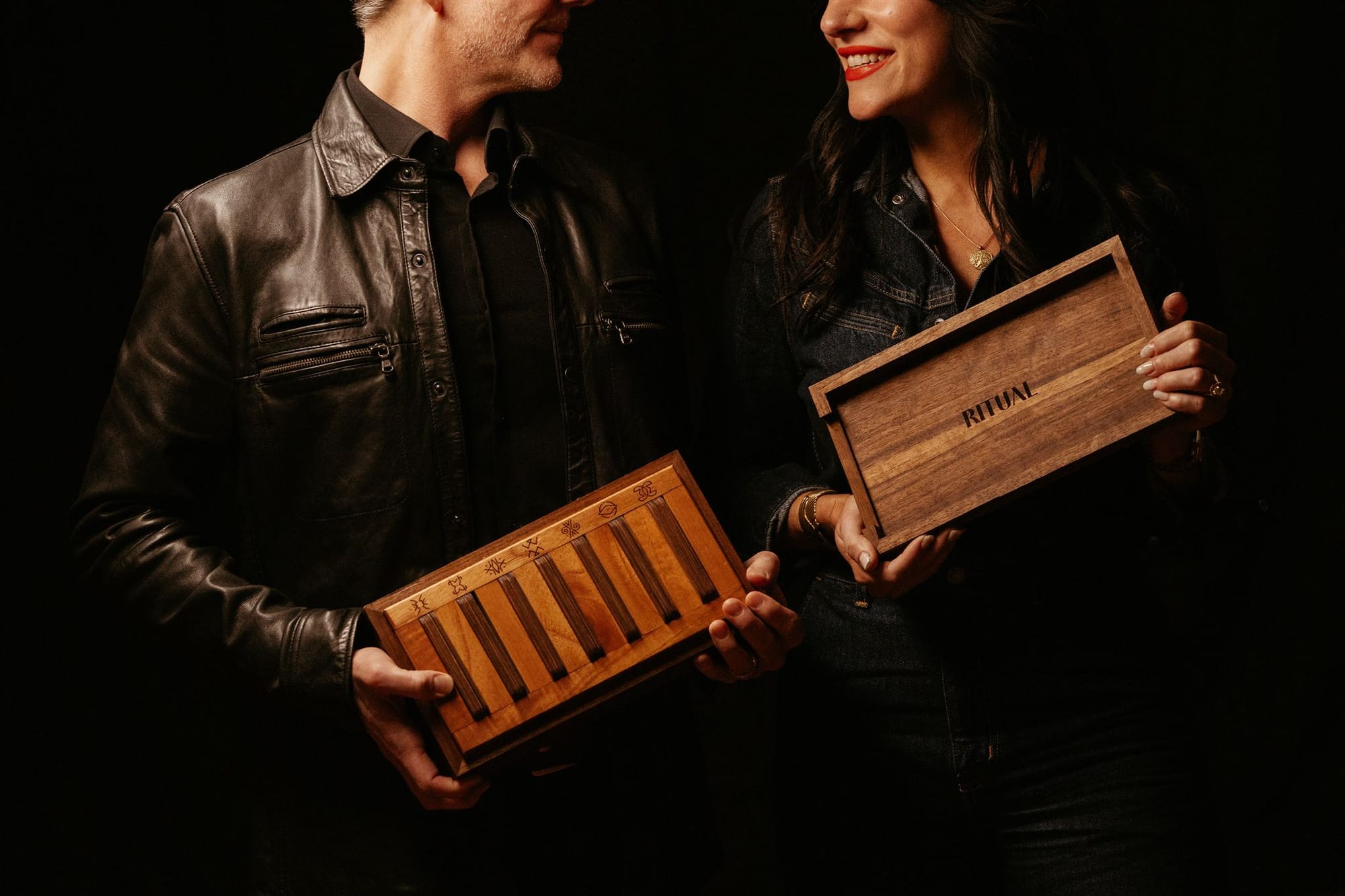
Into this cultural moment arrives Ritual, a beautifully crafted conversation game from The Skin Deep, the studio known world-wide for creating experiences that put human connection at the center.
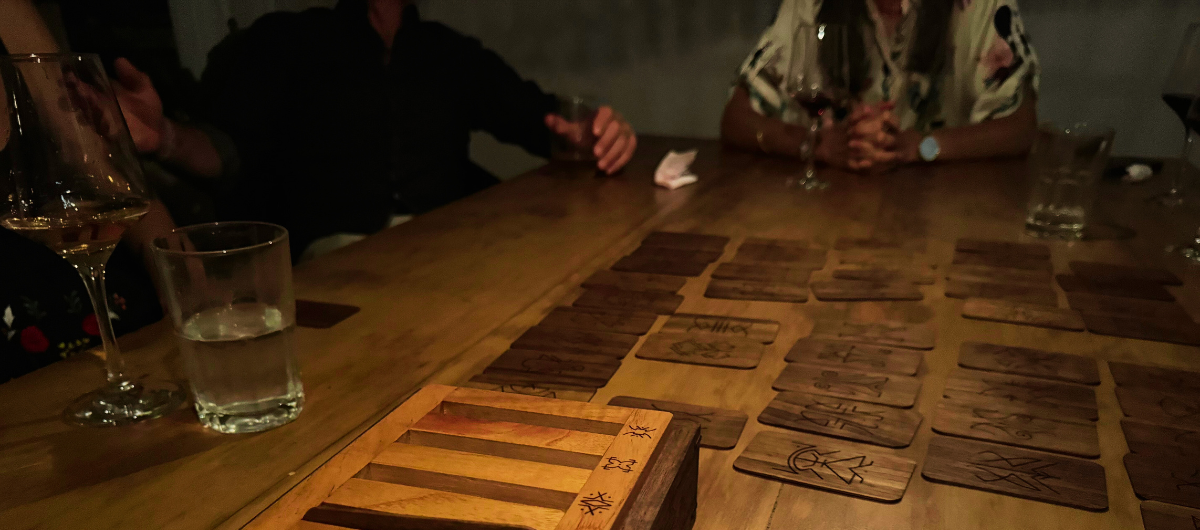
Ritual is, in the most literal sense, a hand-crafted wooden game. It arrives with the weight and warmth of something made with care, the kind of object you set on a table and guests lean toward, not away. In an age of disposable everything, that tactile quality matters. It signals that what is about to happen deserves attention.
"I wonder what might happen if we slow down. If we offer the moment something to gather around. We built an object to host that heat. Walnut cedar carved by hand, etched with symbols that do not explain but invite. The creation of a vortex where the scattered pieces of us finally find a center to hold." - Topaz Adizes, creator of Ritual and The Skin Deep
The mechanics are elegantly simple: 49 unique questions and prompts designed to draw any group, friends, family, or strangers, into a cohesive communal conversation. The prompts engage across a spectrum, moving from the warmly accessible to the genuinely illuminating, calibrated to feel natural rather than forced. There is no winning. There is only the conversation itself.
What Ritual understands, and what makes it particularly well-suited to the dinner party and grown-up game night context, is that the best conversations need just a little architecture. Most groups, left entirely to their own devices, will orbit the comfortable and familiar. A well-placed prompt is an invitation, often exactly the one someone was hoping someone else would extend.
Who It's For
Ritual works because it meets people where they are. At a dinner party, it can be the natural extension of the meal, something brought out with dessert to carry the evening forward with intention. At a game night, it becomes the emotional heart of the gathering, the experience everyone references when they text the group the next morning: "Last night was exactly what I needed."
It scales gracefully across settings. A couples' evening. A group of old friends who have run out of the usual things to say to each other and are ready for something new. A family gathering across generations, where the prompts create bridges between people who might otherwise occupy entirely separate conversational worlds. A dinner with colleagues who want to actually know each other, not just work alongside each other.
The hand-crafted wooden aesthetic also means it earns its place on the table, not as a distraction from the evening, but as an anchor for it. You don't have to explain why you've brought it. You simply place it in the center, and the gathering orients itself.
The Ritual of Making Space
There is something deeply apt about the name. A ritual, in the oldest sense, is a practice that marks time as meaningful, that says, this evening is different from other evenings. We are here, together, and that deserves to be honored.
In our hyperscheduled, overstimulated lives, the act of gathering with intention, of setting aside devices, of sitting face to face, of asking and being asked, is itself a radical act. RITUAL the game is, in this sense, a small ceremony for the art of conversation. It gives the evening permission to matter.
How to Build an Evening Worth Having
Whether or not you bring a game to your next gathering, the principles that make Ritual effective are worth borrowing for any analog social experience you design:
Start with the space. Candlelight is not precious, it is transformative. Dimmer light signals to the nervous system that the evening is for lingering, not rushing. Good music at low volume, good food, a table that everyone can reach across. These are not luxuries. They are the conditions for conversation.
Invite with intention. The best dinner parties are not the largest ones. Eight people who are genuinely curious about each other will almost always out-converse twenty who happen to share a zip code. Think about chemistry, not just logistics.
Protect the phone-free zone. Not punitively, but intentionally. A basket by the door, a gentle ask at the start of the evening. Most guests will be relieved. The conversation will be notably different, and better, without the ambient hum of devices.
Ask better questions. The single highest-leverage social skill available to any host is curiosity. "What are you working on that excites you?" "What have you changed your mind about recently?" "What's a place that changed you?" These are not intrusive. They are generous — they offer people the gift of being genuinely seen.
Let silence happen. The best conversations have pauses. Learn to sit in them. Something worth saying almost always follows.
The Analog Revolution
There is a countermovement taking shape, quiet, organic, spreading through dinner parties and game nights and long walks and concert halls. People are hungry for experiences that are irreducibly present: things that cannot be scrolled past, that demand full attention, that leave you with a story to tell rather than a post to show.
The in-person conversation is the oldest technology for human connection. It remains, by every meaningful measure, the best one. It is also the most endangered in our current moment, not because anyone decided it was no longer valuable, but because it has been crowded out by a thousand cheaper, easier substitutes.
Reclaiming it doesn't require a manifesto. It requires an invitation. A table. Some food. A few prompts that give people permission to be honest, curious, and a little vulnerable with each other.
It requires, in other words, a gathering with intention. It requires something worth calling a ritual.
The art of conversation has not been lost. It has only been waiting for someone to set the table.
Win your own copy of Ritual from The Skin Deep for a limited-time: ENTER HERE

Comments ()