
Made Human — Time & Love
It’s not just what we feel. It’s what we give. It's what we choose to do with what we have. And because time runs out, because we cannot be everywhere, the act of choosing to be here and not there is what gives the moment weight. What gives the relationship value.
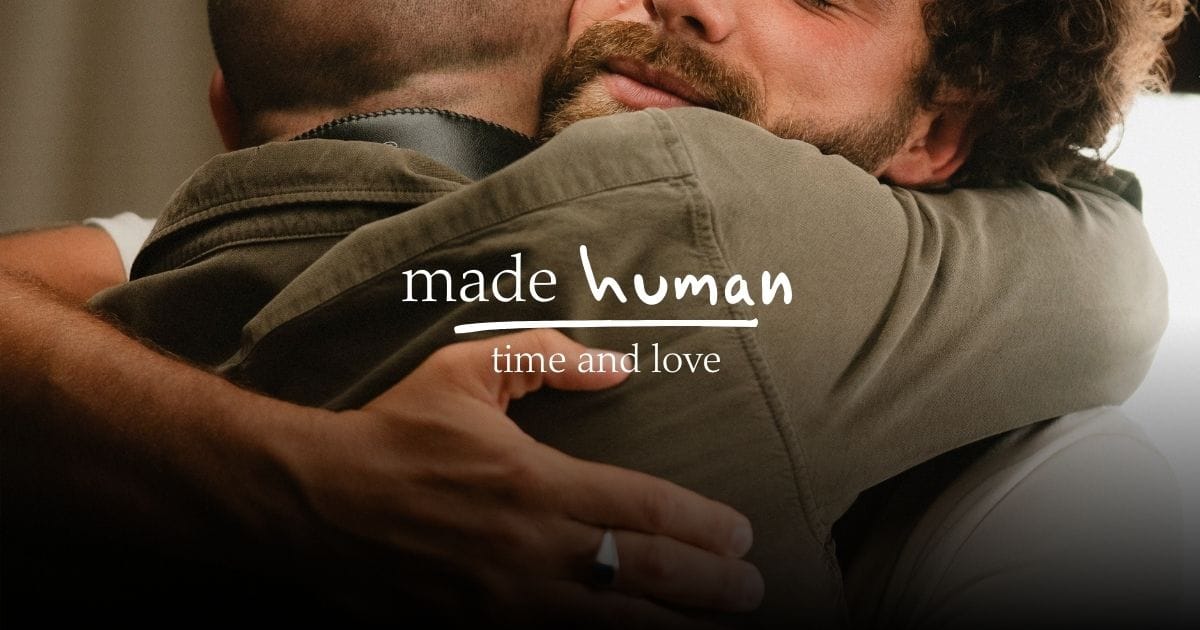
Love doesn't exist without the temporal nature of living.
The fact that each moment inevitably fades into the next means that Time is a necessary requirement of Love.
I didn’t learn this in a classroom. I learned it watching a film.
Her, directed by Spike Jonze in 2013. There’s a scene where Joaquin Phoenix is on a double date with his AI partner, voiced by Scarlett Johansson, and some friends, sitting on a hilltop. She explains that because she isn’t tethered to a body, she doesn’t experience time the way humans do. She can speak with countless people at once. Point being, she doesn’t need to choose.
Later, he discovers just how true that is as she’s talking to hundreds of others, even loving dozens of them simultaneously. For her, there is no loss, no risk nor sacrifice. No risk—because she can be in many places at once, and no sacrifice because she has forever, untethered to a body that will one day deteriorate.
But for us?
We are tethered to time.
We are bound to choice.
Every moment is finite.
Every conversation requires saying no to all the others you could be having. When I sit across from you, it means I’m not across from anyone else. When I spend an hour with my children, it’s an hour I’ll never get back nor would I want to.
That’s when I realized: Love is made out of Time.
It’s not just what we feel. It’s what we give. It's what we choose to do with what we have. And because time runs out, because we cannot be everywhere, the act of choosing to be here and not there is what gives the moment weight. What gives the relationship value.
An AI may never need to choose.
But we do.
And that’s what makes our love real.
So the question isn’t "How do I make more time?"
but rather
"Where am I choosing to place the time I have—and how fully am I giving myself over to it?"
Comments ()