
Emotions Aren’t The Enemy, Give Yourself Permission To Let Them Live
Embrace your emotions instead of fighting them. Discover 4 science-backed exercises, mindfulness, breathwork, movement, and journaling, to build emotional intelligence, self-compassion, and resilience.
Emotional Acceptance & Self‑Regulation: 4 Proven Exercises to Feel Without Fighting
There’s no such thing as a “negative emotion,” but we can all interpret and express emotions in ways that have a negative impact on our lives. The first thing I think of when anyone talks about feelings is acceptance, embracing whatever it is we might be feeling. Trust me, that path can be wiser, healthier, and a lot more beneficial in the long run.
As someone who was diagnosed with BPD (Borderline Personality Disorder) about a decade ago, I have learned through therapy and psychiatry that embracing what I feel (even if it’s not pleasant or comfortable) is essential in my healing process. This might be tricky, but I’m not talking about accepting certain wrong, painful, or uncomfortable situations; I’m talking about accepting the feelings that come with those. A study published by the Journal of Personality and Social Psychology demonstrates that people who accept their mental experiences instead of judging themselves build better psychological health.
Emotions –intense, mild, confusing, contradicting, complex– are one of the beautiful paradoxes that make us human. Aamir, a dear friend of The Skin Deep, said when asked about what made him feel most human:
“Grief, sadness, empathy, anger – that makes me feel extremely human; the learning that you’re allowed to feel these things and it’s not wrong.”

And he’s absolutely right! Apparently, contradicting emotions can even coexist within us if we make intentional space for them. Learning how to do that leads to higher emotional intelligence.

According to scientific research, there are four main mental health exercises that can help you in your acceptance process and eventually better manage emotions:
Mindfulness & Monitoring
Monitoring your moment-to-moment experience with your feelings and the sensations they cause is important. To do this, follow these simple steps:
- Take 5–15 minutes to be alone with your thoughts. Pay attention to anything that comes up, any sensations, thoughts, or feelings, and just observe them.
- Say this out loud: “It’s okay that this feeling is here. I welcome it. I allow myself to feel it. I acknowledge its presence and I don’t judge myself for it.”
- If thoughts like “I shouldn’t feel this way” come up, remind yourself that it’s also okay to feel that on top of your other feelings. Remember: they can peacefully coexist; they don’t need to fight each other or clash.
- Ask yourself questions like: “What did I notice just now?” “What did this moment change for me?” “How does my relationship with this emotion feel different now?”
This can help reduce the internal struggle with the emotion –and therefore stress– and opens you up to the experience of the emotion instead of trying to fight it.
Breathwork
This one is very popular but often underestimated. There are plenty of exercises, but two have been proven to help with the anxiety of trying to fight an emotion:
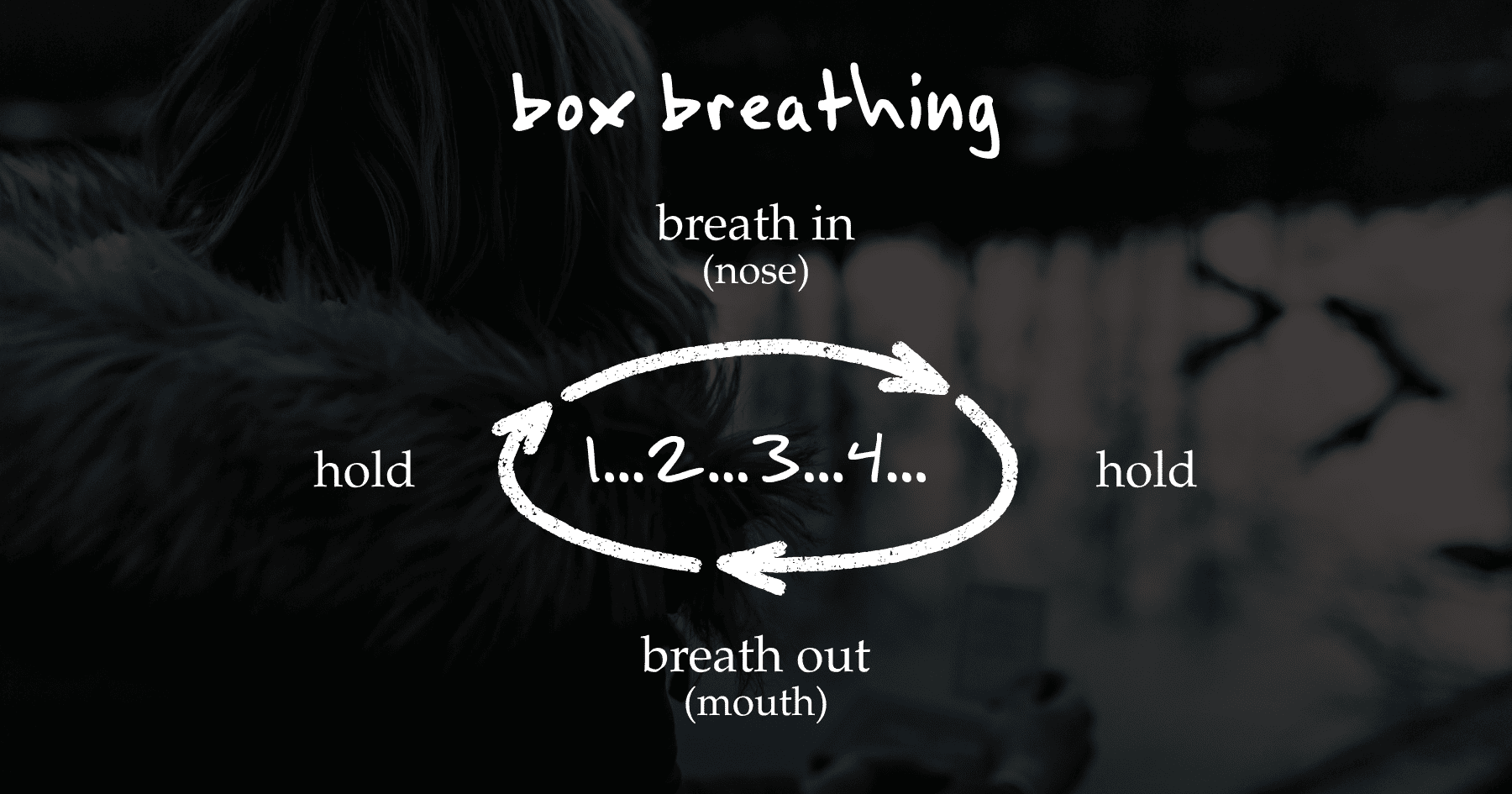
- Box breathing: Inhale for 4 seconds → hold for 4 seconds → exhale for 4 seconds → hold for 4 seconds. Repeat for 2 minutes straight.
- Cyclic sighing: A pattern of inhaling and a long exhale can help your nervous system calm down and prevent your body from getting worked up and stressed.
You’ve probably heard of these breathwork for anxiety techniques before, but don’t underestimate the power of their simplicity. Breathing is the most essential survival activity in our bodies. If you focus on it and direct it intentionally, it can suddenly feel like natural magic.
Movement & Exercise
Physical activity helps tremendously with emotional regulation, in addition to its physical benefits. Research shows that higher physical activity is correlated with lower symptoms of depression and anxiety, and a higher ability for emotion regulation.
Pick any physical activity you like, ideally engaging in it 3 times a week for around 30 minutes. Before and after each session, take a moment to check in with yourself and ask, “How do I feel right now?” Whatever comes up is perfectly fine. During the activity, notice any sensations –tightness, breath, heartbeat, your mood– and afterward ask, “How did this activity change how I felt before?” Again, whatever answer you come up with is perfectly fine.
Journaling
Writing down emotions, memories, thoughts, ideas, or sensations helps externalize your internal experience. The key is to do this with curiosity rather than judgment:
- Pick a moment every day –right after waking up, before bed, or anywhere in between– and write for 5–10 minutes.
- Ask questions like:“What am I feeling right now and where do I think it’s coming from?” “What story is this emotion telling?” “What could happen if I sat with the emotion and talked to it instead of trying to fix it?” “When was the last time I felt this way and what did I learn from it?” “What could this feeling possibly be trying to teach me right now?”
- Finish by writing: “I allow myself to feel this. I will not judge it or push it away.”

Journaling for emotions helps you observe and analyze feelings without being consumed by them. One incredible tool you can use in your journaling journey is {THE AND} Self Edition, our card game that’s more like therapy in a box than a game. It’s designed to help you discover yourself and reconnect with inner peace and self-compassion. A beautiful example by one of our lovely community members here.
 LaToya Smith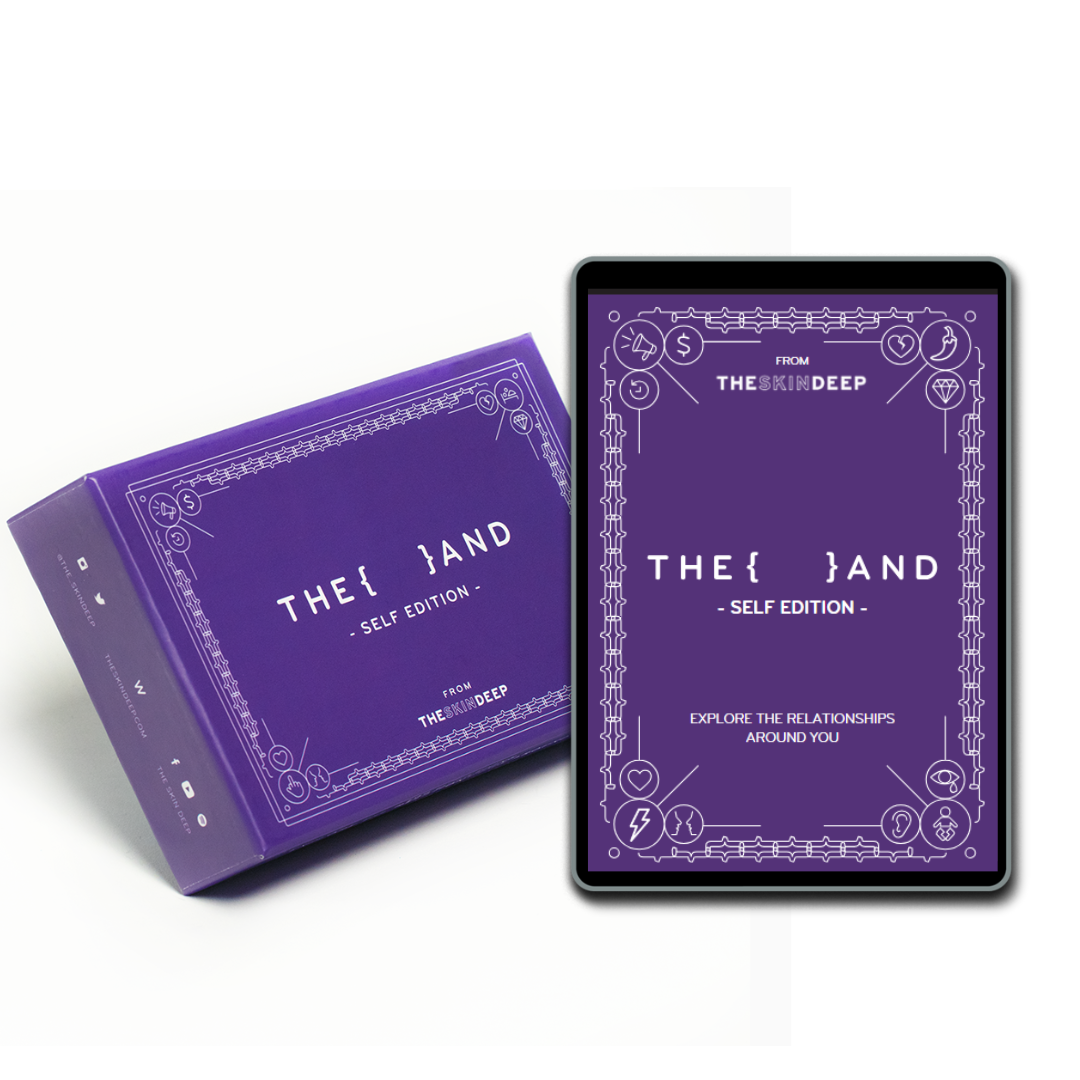
We all feel things we wish we didn’t, but the goal isn’t to control emotions, it’s to meet them. The more we allow our emotions, the more easily they move through us.
Final Thoughts & Tips
- Name it to tame it: sometimes, labeling an emotion or giving it a life/personality helps show compassion and empathy toward it and yourself. Read my article on my journey with depression to know more about how this helped me in my personal healing journey.
- Find your anchor: a physical object or an idea can bring you back to yourself whenever you need it, signaling to your nervous system, “You’re safe here.” For example, my anchors while struggling with depression were my favorite stories. If you’re curious to know what I mean you can read more about it in my article “World Suicide Prevention Day: What Helped Me Survive When I Didn’t Want To”.
- Be gentle and curious: harshness is the opposite of what we need here. Be patient and kind to yourself, and give yourself permission to feel. No feeling is final.
- Consistency: doing these practices once won’t change much. Practice them often to build tools for emotional intelligence.
- Notice the difference: pay attention to shifts in your emotions and physical reactions. Treat yourself to small joys – a favorite meal, a night out, or anything that reminds you, “I’m doing a good job.”
Always remember: you’re not fixing the emotion; you’re relating differently to it and learning to accept your feelings.

Remember: this isn’t about forcing your feelings into neat boxes or pretending everything is always “positive.” It’s about giving your emotional life the space it deserves so you can be with your feelings rather than at war with them. When you practice emotional acceptance, monitor how you feel, name what’s there, breathe through it, move your body, or journal with curiosity, you build emotional regulation, self-compassion, and resilience.
If you want a deeper connection with yourself or anyone in your life and you love this guide, subscribe to join our community at The Skin Deep and get more prompts, tools, and inspiration to feel more seen, more connected, and more alive. Your emotional life is valid. Your feelings are part of your story. You’re not alone.
Regina Zuniga,
The Skin Deep Content Writer
References
- Lindsay EK, Chin B, Greco CM, Young S, Brown KW, Wright AGC, Smyth JM, Burkett D, Creswell JD. How mindfulness training promotes positive emotions: Dismantling acceptance skills training in two randomized controlled trials. J Pers Soc Psychol. 2018 Dec;115(6):944-973. doi: 10.1037/pspa0000134. PMID: 30550321; PMCID: PMC6296247.
- Ford BQ, Lam P, John OP, Mauss IB. The psychological health benefits of accepting negative emotions and thoughts: Laboratory, diary, and longitudinal evidence. J Pers Soc Psychol. 2018 Dec;115(6):1075-1092. doi: 10.1037/pspp0000157. Epub 2017 Jul 13. PMID: 28703602; PMCID: PMC5767148.
- Balban MY, Neri E, Kogon MM, Weed L, Nouriani B, Jo B, Holl G, Zeitzer JM, Spiegel D, Huberman AD. Brief structured respiration practices enhance mood and reduce physiological arousal. Cell Rep Med. 2023 Jan 17;4(1):100895. doi: 10.1016/j.xcrm.2022.100895. Epub 2023 Jan 10. PMID: 36630953; PMCID: PMC9873947.

Comments ()